- First Step to Final Offer
- Posts
- First Step to Final Offer 3/31/26
First Step to Final Offer 3/31/26

Brooks Gammill
March 31, 2026

Your weekly round-up of an M&A deal walkthrough, insightful market news summaries, technical quiz questions, and various internships, events, and diversity programs. A key resource to best prepare yourself for finance recruiting. If someone sent you the newsletter subscribe below!
CAREER OPPORTUNITIES
Class of 2028 Finance and Consulting Opportunities
Oppenheimer & Co. Inc. 2027 Investment Banking Summer Internship – LatAm (New York, NY) Link
William Blair Equity Research Intern - Summer 2027 Link
SIG Analyst Internship: Summer 2027 - Multiple Roles and Locations Link
PSG Equity 2027 Summer Sourcing Analyst Link
PSG 2027 Summer Investment Analyst Link
Fifth Third Bank Summer 2027 Intern CIB - Multiple Roles, Industries, and Locations Link
Capstone Partners Summer Investment Banking 2027 Internship Link
To see c/o 2028 opportunities, click here: Class of 2028 Application Tracker
Class of 2027 Finance and Consulting Opportunities
PJT Partners 2026 Summer Analyst - Strategic Advisory - Multiple Roles and Locations Link
Berkeley Research Group 2026 Summer Associate (Intern) - Multiple Roles and Locations Link
Apollo Global Management 2026 Summer Analyst, Quant Analytics Link
To see c/o 2027 opportunities, click here: Class of 2027 Application Tracker
Class of 2026 Finance Opportunities
TECHNICAL QUESTION OF THE WEEK:
Would you rather be handed $1,000 today or $100 every year into perpetuity? |
MARKET NEWS
US Treasury to Engage Insurance Regulators on Private Credit Risks
The US Treasury plans to hold a series of meetings with domestic and international insurance regulators to assess risks in the $2 trillion private credit market, amid growing concerns around liquidity, transparency and lending standards. Officials are seeking input on issues such as fund-level leverage, offshore reinsurance structures, asset quality and the consistency of credit ratings, as private credit becomes more intertwined with regulated financial institutions like pensions and insurers. Treasury Secretary Scott Bessent emphasized that while private credit has supported economic activity, regulators are focused on ensuring it does not pose broader systemic risks or lead to potential contagion within the financial system.
Source: Reuters
M&A DEAL OVERVIEW
Apollo Nears $10 Billion Deal for KKR’s Atlantic Aviation
Apollo Global Management is close to acquiring Atlantic Aviation from KKR in a deal valuing the private jet services operator at nearly $10 billion, with Singapore’s GIC partnering to take a majority stake while KKR reinvests to retain a significant ownership position. The transaction, which could be announced within days, highlights continued exit activity for KKR, which acquired the business for about $4.5 billion in 2021. Atlantic Aviation operates more than 100 fixed-base locations across the US, providing fueling, maintenance and hangar services for private aviation, and the potential deal underscores sustained investor interest in infrastructure-style assets despite a broader slowdown in exits.
Source: Bloomberg
LAST WEEK TECHNICAL QUESTION OF THE WEEK ANSWER:
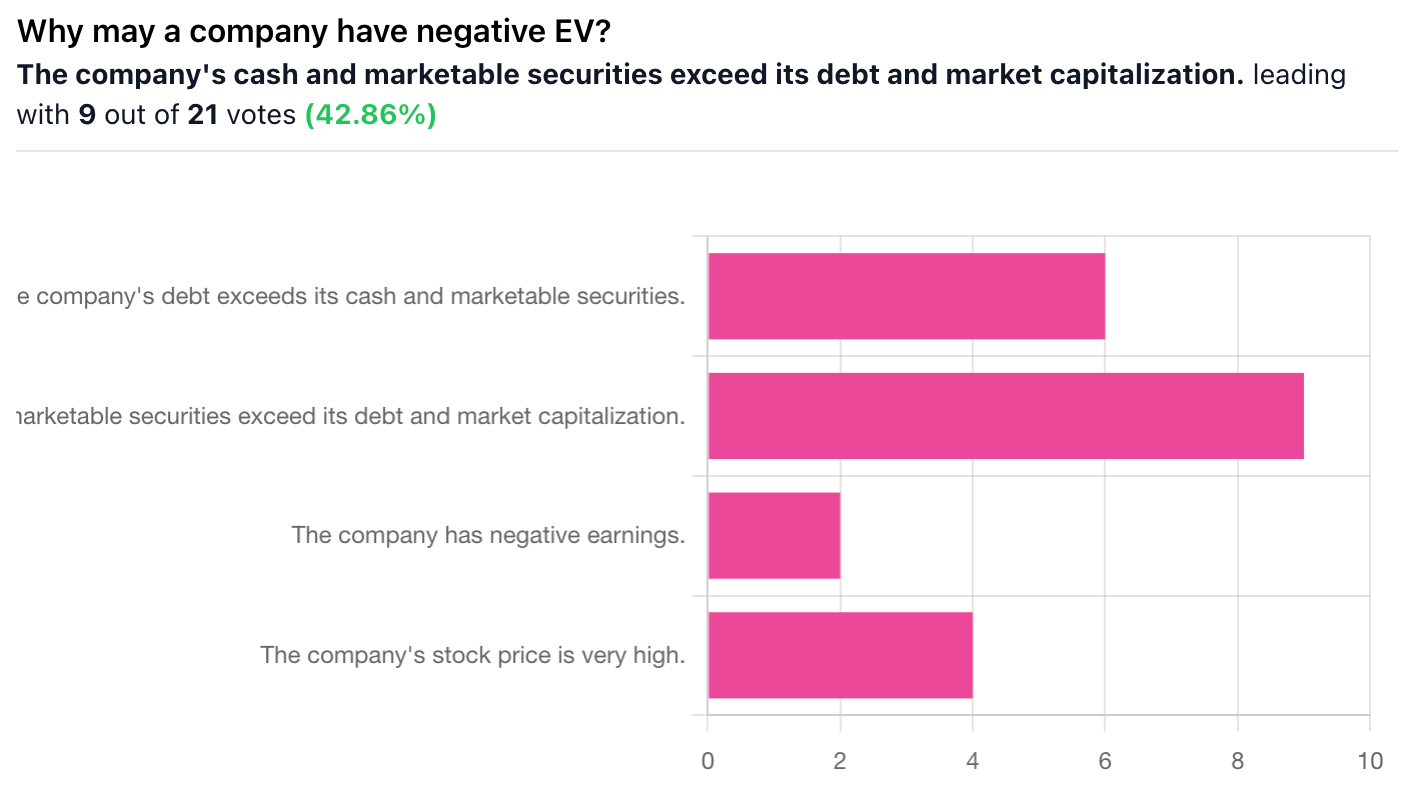
Correct Answer: B, The company's cash and marketable securities exceed its debt and market capitalization. — Why may a company have negative EV?
Explanation: A company may have a negative enterprise value when its cash and marketable securities exceed the sum of its debt and market capitalization, meaning the market is effectively valuing the operating business at less than zero. This can happen if investors expect the company to burn cash, face declining prospects, or have significant risks not reflected on the balance sheet. In such cases, the company’s excess cash outweighs its total valuation, leading to a negative EV.